Orchiectomy
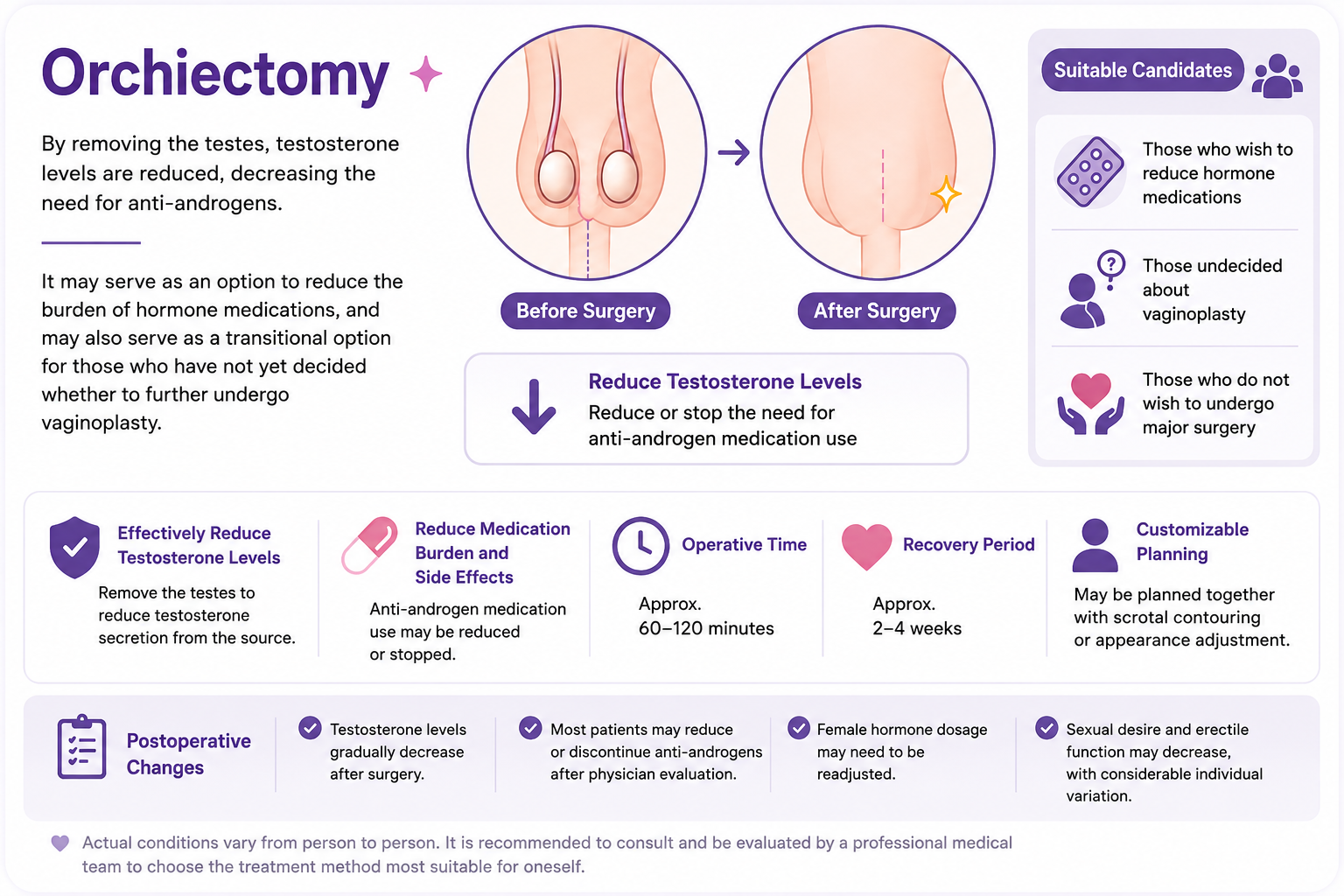
By removing both testes, the secretion of testosterone in the body is reduced, thereby decreasing or stopping the need for anti-androgen medications.
This surgery may serve as an independent option in gender-affirming treatment, or as a transitional stage before considering future vaginoplasty, helping to stabilize hormonal status and reduce the burden of long-term medication use.
Surgical Features
- Effectively reduces testosterone levels in the body
- Reduces the use of anti-androgen medications and related side effects
- Short operative time and relatively faster recovery period
- Does not affect the possibility of undergoing vaginoplasty in the future
- May be planned together with scrotal contouring or appearance adjustment
Suitable Candidates
- Those who wish to reduce or stop anti-androgen medications
- Those whose hormone therapy effects are stable and who wish to further reduce the source of testosterone
- Those who have not yet decided whether to undergo vaginoplasty
- Those who wish to complete gender-affirming treatment in stages
- Those who do not wish to undergo a larger-scale surgery, or who are not suitable for long-duration surgery due to health factors
Postoperative Changes
- Testosterone levels gradually decrease after surgery
- Most patients may reduce or discontinue anti-androgens after evaluation by an endocrinologist
- The dosage of female hormones may need to be readjusted
- Sexual desire and erectile function may decrease, with considerable individual variation
Surgical Method
The surgical incision is usually hidden within the central scrotal raphe or natural folds, making the wound less noticeable. If the entire spermatic cord is to be removed, the wound area will be larger.
The operative time is approximately 60 to 120 minutes. In most cases, patients may return home on the same day, and the recovery period is approximately 2 to 4 weeks.